
Racing To Net Zero
The hypocrisy permeating the climate change debate is backfiring. Time for a more transparent approach.

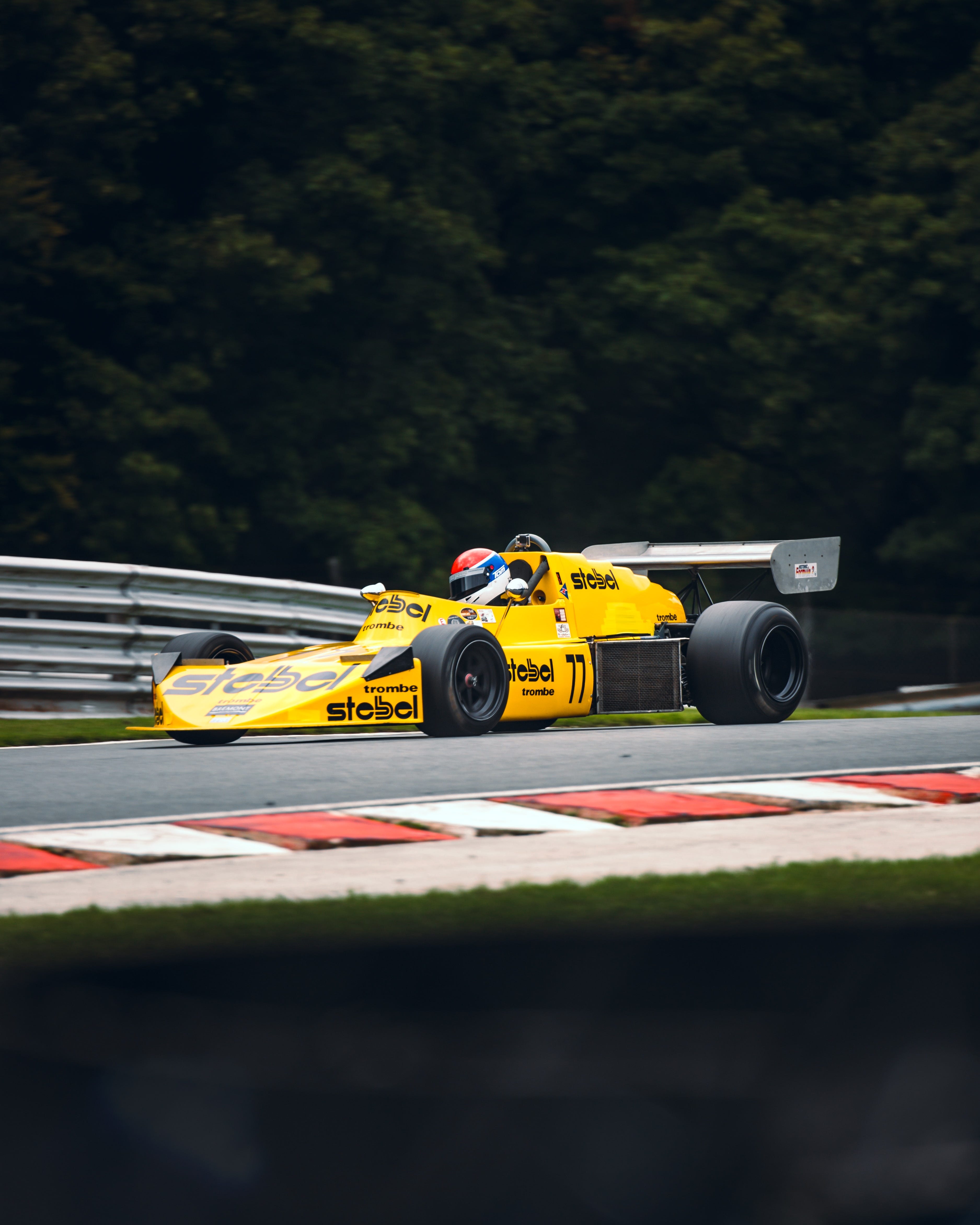
Photo by Danny Sleeuwenhoek on Unsplash
You thought optics matter. You were wrong.
The COP 28 climate summit just kicked off in the United Arab Emirates. With high temperatures of 80-83 degrees Fahrenheit (27-28 Celsius) and 80% humidity, the delegates’ carbon footprint will add round-the-clock air conditioning to the private jet flights. And…the summit aptly coincides with the Formula 1 Grand Prix in Abu Dhabi! What a way to signal concern about emissions and global warming. Officials will urge a faster transition to electric vehicles and then pop by to watch gas-guzzling Formula 1 cars rocket around the circuit.
You could hardly have found a better way to highlight the hypocrisy permeating the public debate on climate change — a hypocrisy that risks undermining any meaningful progress. If you care about climate change, it’s this hypocrisy you should worry about the most. It runs on three levels:
Extinction theatre
“We are all going to die!” This has been the rallying cry of the most rabid alarmists, who have been penning apocalyptic articles or gluing themselves to famous paintings in museums or to the asphalt in the middle of highways. Scientists and policymakers have fanned the flames of panic, warning of potential catastrophic consequences if global temperatures rise more that 1.5 degrees Celsius over pre-industrial levels.
The problem with all this extinction theatre, as I have pointed out in past blogs, is that neither governments nor climate activists behave as if they truly believe it. Governments have struggled to commit to measures that they themselves recognize are insufficient to keep global temperatures below the 1.5 threshold. If they truly believed we face extinction, they’d be doing a lot more.
Besides, in this era of constant panics and short attention spans, people eventually get tired of hearing that we’re all going to die because of climate change. After a while we feel the urge to panic about some other existential threat.
Money money money
If I can’t scare you, perhaps I can bribe you? A seemingly more rational argument to accelerate the green transition is that climate change is set to impose daunting economic costs: more frequent and devastating natural disasters will cause major economic losses; insurance costs will soar; ecological disasters will disrupt agricultural production and supply chains; and “climate refugees” will boost immigration, causing a massive rise in social unrest, crime, and wars.
Investments in the green transition, it is argued, will reduce these costs, yielding a net economic benefit. This in turn supposedly justifies a range of subsidies and tax breaks, to induce households to purchase electric vehicles or to support start-ups developing new climate-friendly technologies. It’s a win-win!
Except it is not: Jean Pisani-Ferry, of Bruegel and the Peterson Institute for International Economics, in a report on the economic impact of climate action prepared for the French Prime Minister, points out that ““By putting a price—financial or implicit—on a free resource (the climate), the transition increases production costs, with no guarantee that the reduction in energy costs will eventually offset them, while the investments it calls for do not increase productive capacity but must nevertheless be financed.”
Pisani-Ferry does not argue against the green transition — quite the contrary. But his report highlights the major economic costs:
Achieving the stipulated emission-reduction targets will reduce economic growth over the next decade. Much of the investment will replace existing capital, not add new productive capacity, and hence will not increase potential growth (We’ll have to build new equipment just to keep heating our homes and keep traveling around the way we do now.)
In fact, green transition measures will reduce productivity growth by a quarter of a percentage point a year between now and 2030; since for most developed countries productivity growth averages under one percentage point, that’s a big reduction.
The transition will impose a heavy cost on middle-class households, and will impact poorer individuals more, exacerbating inequality.
To finance the needed unproductive investment and mitigate inequality will require heavier government intervention; even with higher taxation, Pisani-Ferry estimates it will raise public debt by 25% of GDP by 2040. This comes after government debt ratios around the world have already ballooned.
The need to more than double investment in renewables will cause much greater volatility in the prices of energy resources.
The transition will cause a significant rise in inflation, by acting as a negative supply shock on both capital and the labor market.
In the long run, the green transition might deliver higher growth than a no-transition alternative; but there is a significant price to pay to get there.
We’ll end up in a socialist paradise with no impact on the climate.
To summarize: meeting the net zero targets will imply lower productivity and economic growth, higher inflation, greater inequality, higher taxes and heavier public debt burdens over at least the next decade.
Note that France has the highest share of electricity generated by nuclear power in the world (nearly 70%), so it starts from a very favorable situation; the costs described above will be greater for most other countries.
A recent analysis by the climate economist Richard Tol suggests the economic costs will be even more long-lasting: it estimates that capping the rise in temperatures below the 1.5 degree threshold would cost 4.5% of global GDP per year through 2050 (and 5.5% through 2100), far outweighing any economic benefits. (Highlights in this Wall Street Journal OpEd by Bjorn Lomborg.) Having been told over and over that the green transition would be painless, sweetened by government subsidies for electric cars and solar panels, voters react badly as these true costs become apparent.
And I don’t know about you, but the idea that governments will (i) guide a larger and growing share of countries’ investments and (ii) raise taxes and social spending at the same time, does not fill me with confidence. We’ll end up in a socialist paradise with no impact on the climate.
Doing not-so-well by doing good
A corollary to the bribing strategy has been the idea that investing in green funds could generate market-beating returns, allowing you to “do well while doing good.” Never mind that logic (science!) suggests that if you impose an extra constraint on your strategy, you will end up no better off than without it (all options available with the new constraint would still be available without it, others however will get closed off, like say, investing in oil companies when an energy crisis hits…).
Now it turns out that far from outperforming, key “green” stock indices are underperforming by a large margin, and investors are none too pleased. Again, blame the underhanded hypocrisy which pretended this would be a win-win.
Backlash
Across countries, voters are turning against green policies as the actual costs become apparent, and some governments are already beginning to backpedal. Maybe it’s time for a more honest debate on the threat, the uncertainty, and the costs and benefits of mitigating measures. Or we can scream “extinction” and then settle in to watch the F1 race.
This is a complex conversation and extremely hard to summarize here. As a part-time libertarian (like many here), my tendency is to push against ANY government agency that impedes economic/financial progress. The recommendations of the IPCC, being a government agency by definition and name, admittedly make me cringe a bit. However, can we honestly say, with a straight face, that Oil and Gas companies are not Government Entities just because they have controlling families and shareholders? I would argue that they effectively own governments and dictate policies. Indeed, they have historically influenced when and where wars are waged. In the not-so-distant past, we toppled regimes and invaded countries under their direction. To equate them and their motives with a group of university professors, often stereotyped with crazy hair and worn-out suits, seeking the next grant or boondoggle, seems excessive to me.
Margaret Thatcher and Ronald Reagan had a lot to say about the necessity of government involvement in this area. You and I had (and I still have) the privilege of living in a state that, under Reagan's governorship in the 70s, imposed some of the strictest emission rules, prompting massive investments and reorganizations. At that time, California was the world’s 9th largest economy; today, it oscillates between the 4th and the 5th. I'm not suggesting a direct correlation, but if someone were to attempt this, then the IPCC seems to have a stronger argument in this debate then the energy-independence-deniers. 😉
Dear Marco,
I have always valued your acumen and insights. This conversation, however, is becoming lengthy and complex, to the point where I find it daunting to even begin. My straightforward question for you is: whom do you consider credible in this intense and almost religious intellectual debate? O&G?
Leverage technology to reduce waste has always been a great investment. Take Las Vegas as an example. Since 1970, the city has seen a ninefold increase in visitor volume and a tenfold increase in room inventory up to 2020. Despite this growth, the total emissions and the overall amount of water used have reduced to a third of what they were in 1970. This represents a 30-fold improvement over the past 50 years. Notably, this efficiency has been achieved despite an increase in both lighting and water usage today. Such efficiency directly benefits the bottom line of the hotel industry.
So, NO, the transition doesn't increase the production cost. It builds resilience, eliminate reliance on dictatorships, monopolies and on a completely unreliable supply chain.