
Ukraine's Geopolitical Spirals
A superb book on the implications of the Russia-Ukraine war.


It’s an appropriate day to focus on geopolitics. And if you love geopolitics, the latest book by Pierre Lellouche is a must-read. Spirals (Engrenages in the French original) is a superb analysis that starts from the Russia-Ukraine war and widens the lens to its global repercussions. Lellouche has extensive experience in foreign policy, including as Minister for Europe and as Minister for Foreign Trade in the French government. His deep culture and sharp intellect shine through the book and distill his experience into precious insights.
Sleepwalkers
Lellouche shows how Europe and the US have sleepwalked into this crisis. Russia had clearly signaled it would never countenance Ukraine’s entry into NATO. The West kept the NATO membership path open and did nothing to deter Russia. Quite the opposite: even after Putin annexed Crimea, Europe deepened its energy dependence on Russia.
The first chapters’ deep dive into the history of Russia and Ukraine helps understand why this war started, and assess the options ahead. Understanding does not mean justifying Russia’s aggression. But a better understanding of history might have helped prevent the war in the first place.
Absent rational understanding, Lellouche argues, emotion rules. In the aftermath of Russia’s invasion western leaders and media cast the conflict as an existential battle between good and evil. Anybody trying to inject a dose of realism was labeled an “appeaser” with dark references to the rise of Nazi Germany in the 1930s.
The conclusion was that nothing less than Russia’s complete defeat could constitute an acceptable outcome — which undermined the possibility of an early peace agreement. When Ukraine briefly gained the upper hand, the desire to believe it could win the war proved as irresistible as it was ill-founded.
This emotional attitude persists, compounded by a deep hypocrisy. Western governments insist Russia must be defeated, but have never been willing to do what’s needed. At the same time, European leaders have escalated their rhetoric in a bizarrely irresponsible way, warning their populations to prepare for an inevitable and perhaps imminent war with Russia. All this makes it hard for Europe to find a way out of the conflict and a way to coexist with Russia in the future.
Geopolitical nightmares
The geopolitical implications, the book warns, are portentous.
Nuclear proliferation becomes highly likely. Had Ukraine held on to its nuclear weapons, it could have deterred Russia. Russia in turn has used to good effect the threat of tactical nuclear weapons. For many countries now, developing a nuclear weapons program will be a rational choice.
The second consequence is the widening rift between the West and the “Global South.” Many emerging countries, including China and India, refused to side with Ukraine and condemn Russia, distancing themselves from the West. This trend has been further strengthened by the Israel-Gaza conflict.
Lellouche sees a concerted effort by the Global South to undermine the Western-led global order. I partially disagree, in that I do not see the Global South as a cohesive group with shared goals. There are tensions across key players, notably China and India. Russia, China and Iran would love to replace the Western system with a more authoritarian one; but India, for example, shares more values with the US than with China. And as it becomes clear that the main alternative to the current order is a China-dominated one, more countries may feel less enthusiastic about the change.
Having said this, here is a quote from the book that I think is worth reflecting on (my translation):
…the western world has discovered […] that what we thought was a set of universal values is not at all universal and might even become a minority set, by the mere impact of demographics.
Life as a medium power
Lellouche also considers these issues from a European and French point of view: France and Germany are trying to maintain influence in global geopolitics as they get downgraded to “medium powers” rank. The obvious route is via Europe. The mighty European Union can stand on a par with the US and China — can’t it? But if each major European power sees Europe as a way to magnify its own global influence, you get a national competition for EU leadership which — coupled with an overweening EU bureaucracy for which Lellouche has little love — dooms the continent to irrelevance.
Lellouche pronounces a merciless indictment of a France incapable of addressing its own domestic problems (law and order, immigration, public finances), while it pontificates on foreign policy issues on which it has no influence. The same can be said about Europe. The Harvard-educated Lellouche, in case you’re wondering, has no illusions about America either: he places the US of President Trump on a par with China and Russia, as a revisionist power.
Spirals is extremely insightful and a pleasure to read. The English-language edition should be forthcoming soon, and if you read French, don’t wait.
AI - Academics cooking the numbers
I posted a brief Note on this, but in case you missed it:
In a new co-authored paper, Nick Bloom of Stanford claims new evidence has made him much more optimistic on AI-driven productivity gains. But the paper’s results are biased in a quite shocking way.
The paper builds on a survey of CEOs and CFOs in the US, UK, Germany, and Australia. A full 90% of firms have seen no impact on either productivity or employment in the past 3 years. Not surprising. For the next 3 years, a full 60% still expect no impact; 25% expect a “small positive impact” and only 12% a “large positive impact”. Yet in a video presentation Bloom claims the overall expected impact on productivity is “enormous”. Come again?
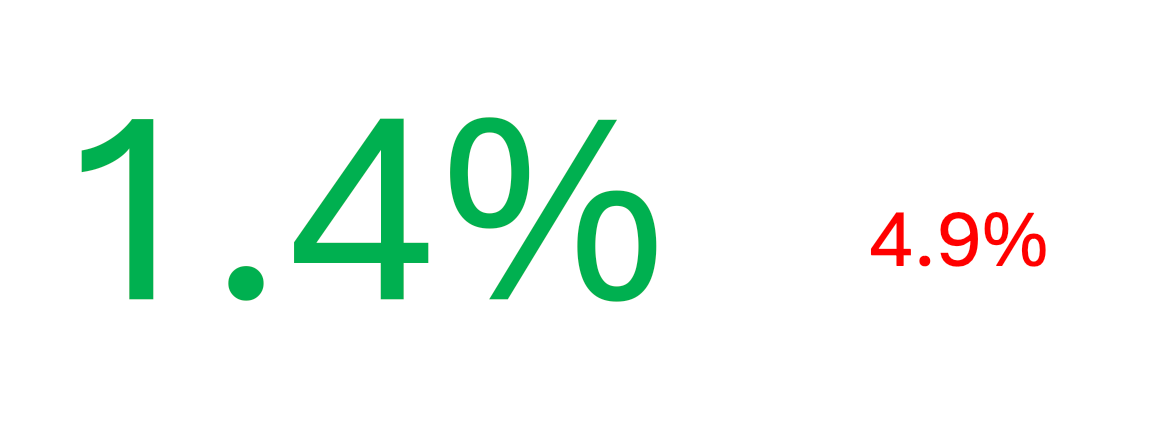
Somehow the expected impact works out to an additional 1.4% over the next 3 years. Bloom argues this is “enormous”, given trend productivity growth in these countries is around 1%.
Wait a second though: the authors’ calculations assume that the average “small” impact is 2.5% — then how can they call 1.4% “enormous” (in the video) or even “large” (in the paper?) In fact, even 4.99% is considered “small” in the questions, though it’s over 3x the “enormous” 1.4%…
The survey questions take 5% as the dividing line between “small” and “large” impact. This skews the results allowing the authors to arbitrarily assume the average “small” impact as =2.5% and the average “large” impact as = 7.5%. Then what’s small in the survey questions magically becomes enormous in the results — and the number is essentially made up in the first place.
I am not impressed. Another cautionary tale of how surveys are often misused, even by high-profile academics.
My takeaway from the survey results is very different: most corporate executives have seen no impact from AI yet, but they see the potential, and on balance are only cautiously optimistic about future impact. As an investor, I’d be reassured.