
Iran’s Two-Sided Risk
Prolonging the Iran war carries serious economic and security risks — so does halting it now


The global media has rallied around a consensus narrative claiming Iran has the upper hand: it has greater staying power than the US, and time is on its side. Every day that goes by, the US depletes its stock of missiles, whereas Iran has an endless supply of drones. Every day that goes by keeps the US tied up in the Middle East, unable to defend its interests in Asia. Every day that goes by, Iran’s chokehold on the Strait of Hormuz inflicts greater damage on the global economy, increasing global pressure on the U.S.. With every uptick in gasoline prices and every casualty, domestic pressure in the US will increase, whereas Iran can suppress domestic dissent indefinitely. Iran’s regime, it would seem, enjoys Nassim Taleb’s anti-fragility: the war only makes it stronger.
The conclusion is that the US should stop hostilities now because it can never win. The implication, spoken or unspoken, is that it should never have attacked in the first place.
The logic of fear
There is logic to this narrative, but its driving force is not logic; it’s fear.
Maybe halting hostilities now is the right choice, but before we take it, we should be honest with ourselves.
At the root of the debate is a simple question: whether or not Iran constituted a grave threat to the West. Many argue that it did not, that it could have been contained with negotiations, that if it did pose a threat, it was just to one country. (Though I suspect feelings might be different if that one country was, say, France or Germany.)
Others, myself included, think that Iran did constitute a serious threat. It was trying to build nuclear weapons, undeterred by negotiations. It was developing long-range missiles able to reach not just Tel Aviv, but Rome and Berlin. The regime’s north star is “Death to America.” Its despise for Western civilization is undisguised. Its aim to erase Israel from the map, declared. Appeasement did not work with Russia and did not stop the rising wave of Islamic terrorism across Europe over the past two decades. To think it would have worked on Iran seems quite a leap of faith.
Calls for the US to stop the war are driven by fear, and this fear is two-pronged. It’s fear of the economic damage from a prolonged rise in oil prices. And it’s fear of terrorist attacks within Western countries. Both fears are justified, but giving up is not the only way to avert them — it might just postpone them.
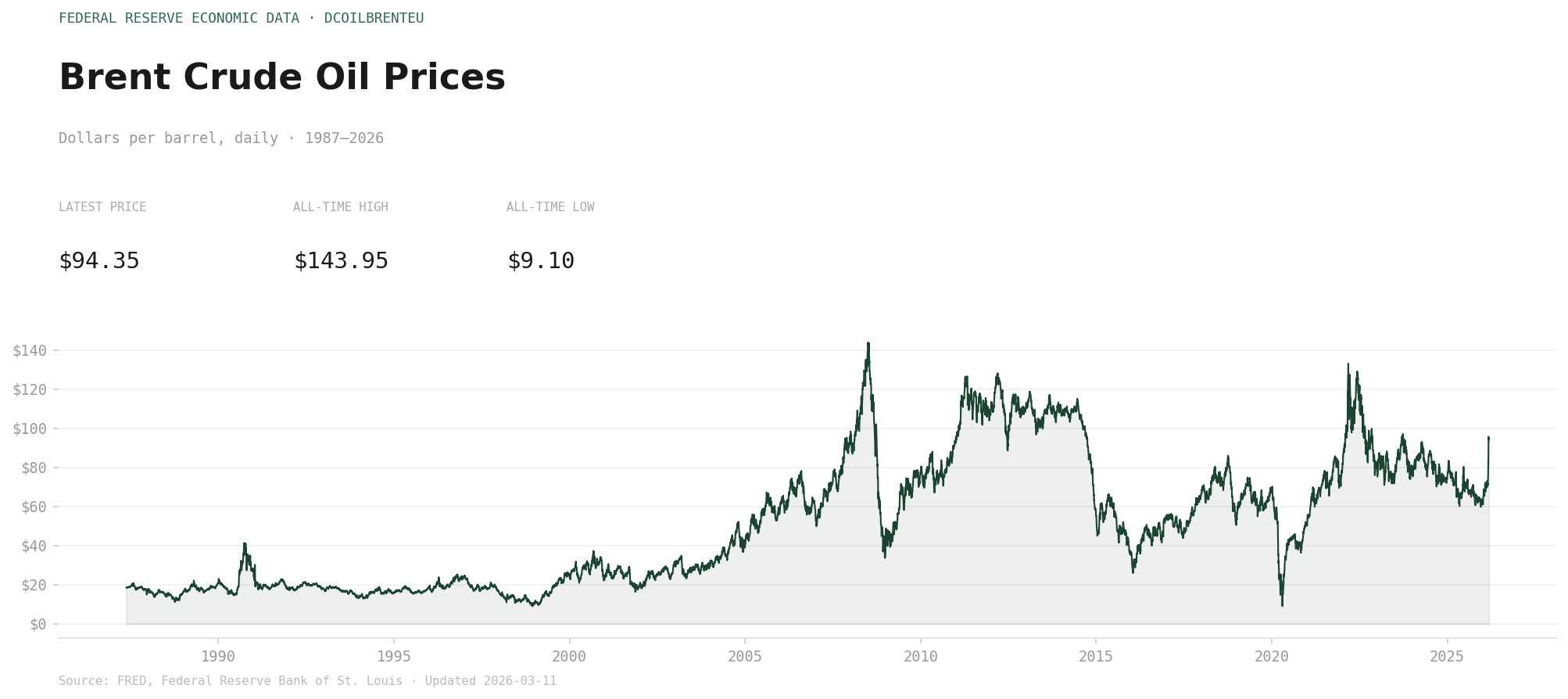
Two-sided risk
The Iran risk is two-sided. Giving up is not a safe option. It would leave Iran’s regime weaker but emboldened, having proved that it has a higher pain threshold and greater staying power than the West, confident that it would always be able to blackmail us. This regime’s goals will not change. This regime does not aim to improve the living standards of its citizens. Its only raison d’être is to inflict pain and damage on the West. We would enjoy a reprieve. Iran would need several years to rebuild its infrastructure of terror and its arsenal of weapons. But rebuild them it will. We should have no illusion as to what endgame this regime envisions.
Set aside the fact that we might well be underestimating the punishment the Ayatollah’s regime is taking, and overestimating its resilience. Set aside the fact that oil prices are still well below the 2022 Russia-invasion levels. I know there is no guarantee that the war can change or tame the regime in Iran. I know there is a risk that prolonged disruption to oil supply will plunge us into a global recession. Still, a global recession will be painful but not life-changing. I would rather risk a global recession now than risk the damage that a fanatical Islamic regime explicitly committed to war on the West could inflict in the future.
If you think Iran posed no serious threat to the West, you will naturally disagree. But we have a tendency to worry in the abstract and then shrug off concrete threats. There has been much hand-wringing about the rise of an axis of adversarial revisionist powers, including China, Russia, and Iran. Still, we assumed Russia posed no serious threat and now here we are, worried it will gobble up the Baltics and Poland. We should not make the same mistake about Iran.
We can still decide that we are not ready to pay the economic price and shoulder the security risks that this war entails. But we should be honest with ourselves about all the risks we face before deciding which ones we’re willing to take.
Marco:
This war is shaping into classical game of chicken between the world’s mightiest power and a country with nothing left to lose. And willy nilly it has dragged most of the world living on oil from the Middle East. Amongst the worst to suffer are friends of US in the gulf- countries with oil and money but no capacity to enter the war, and who don’t want the war to continue.
Your article focuses on impact on Europe but this war also impacts the whole of Asia, the world’s manufacturing power house.
I believe it is time for US to create conditions for ending this conflict, while ensuring full security to Israel. Iran is no longer a threat to Israel.
The alternative- boots on ground- is a terrible option.