
Can India Break The Mold?
A brave new world requires a brave new strategy — Book review

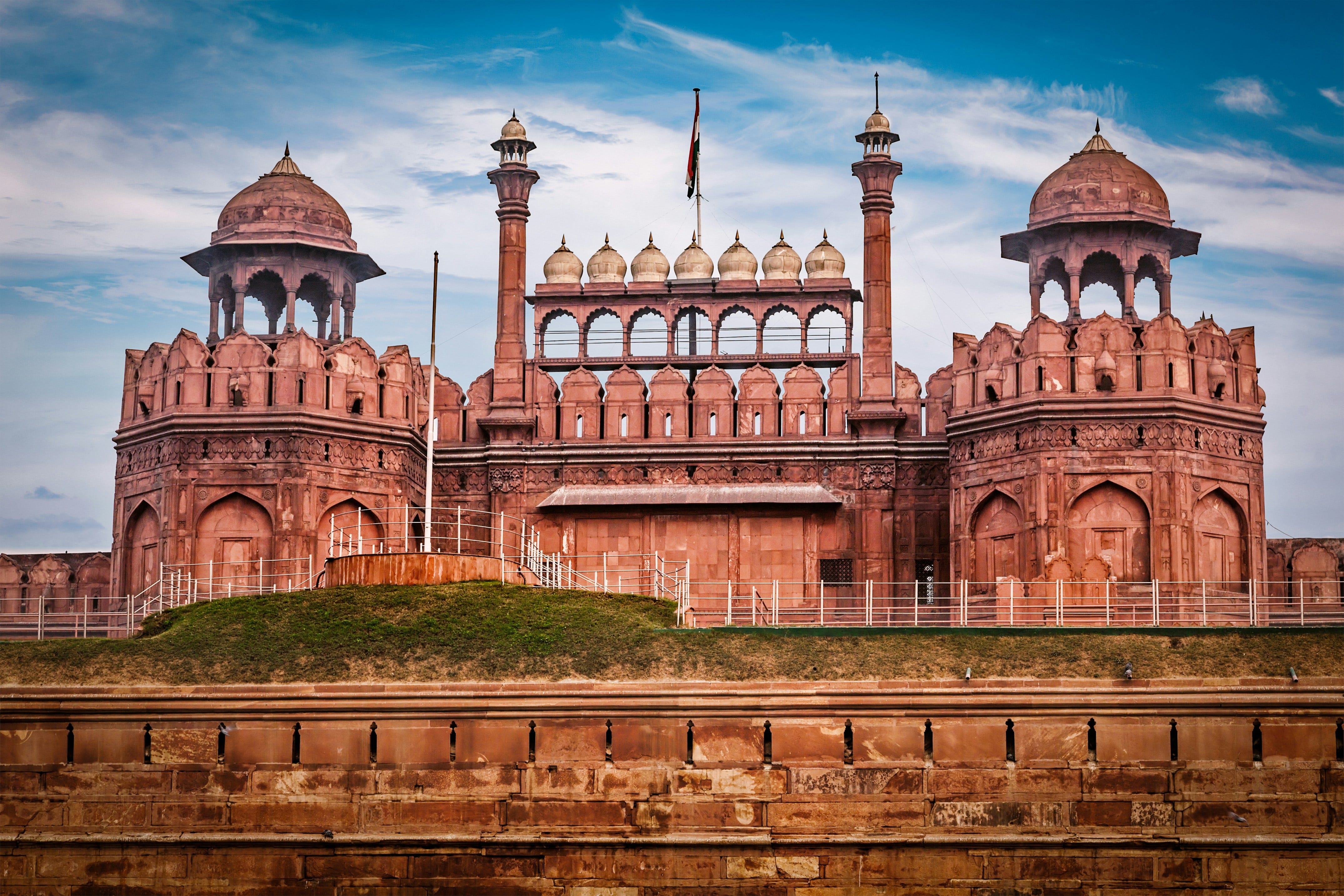
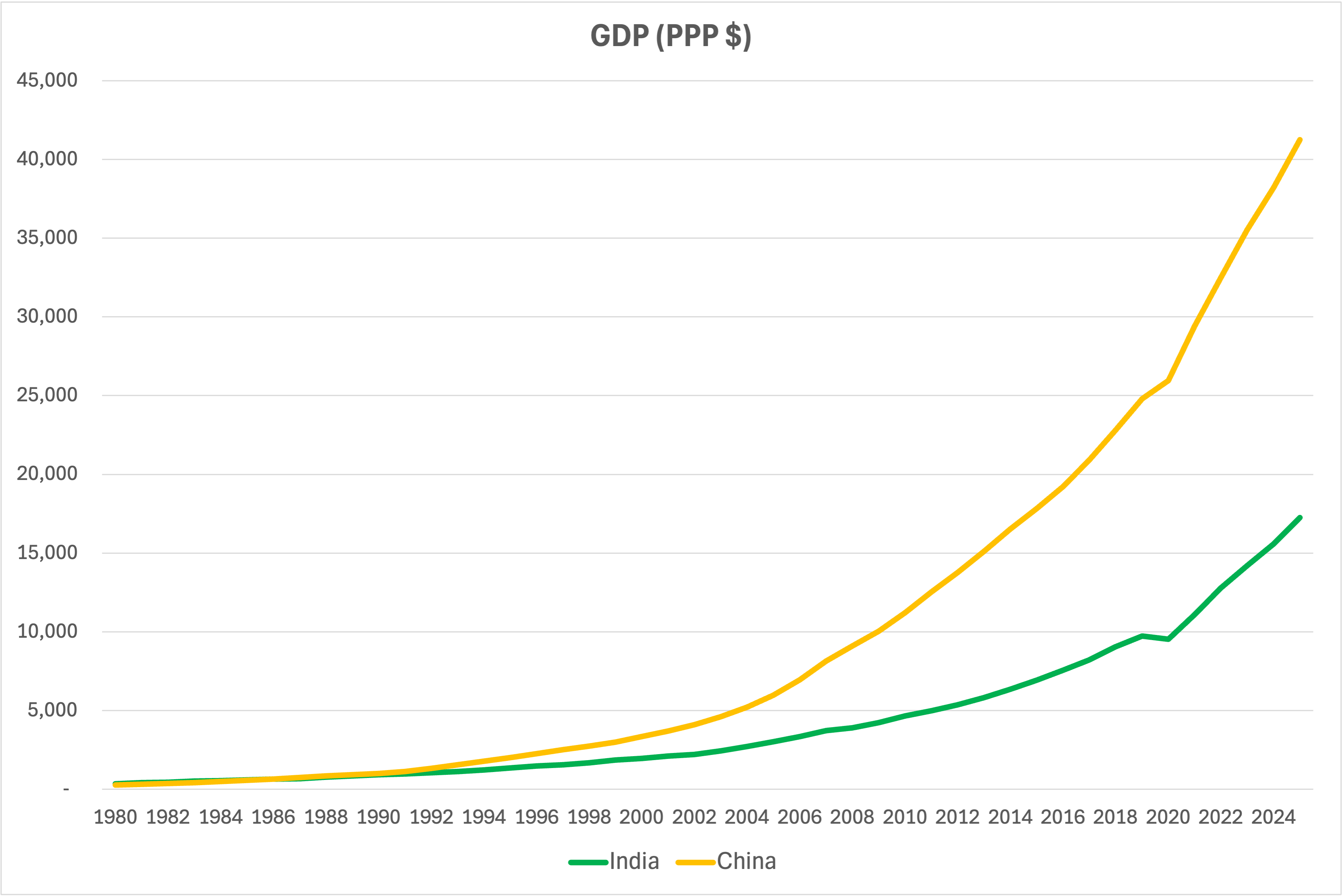
India has surpassed China to become the world’s most populous country, at close to 1.5 billion people. Its economy, though, has fallen far behind: In 1980, it was one-third larger than China’s. Today, China’s economy is more than twice India’s size (in PPP). China accounts for 20% of the global economy, India just 8%.
How can India make up for lost ground? In “Breaking the Mold”, Raghuram Rajan and Rohit Lamba start with the hard truth: India cannot run the same playbook of other successful emerging economies. That fleet of container ships has sailed… The world has changed.
Rajan (University of Chicago) has been Chief Economist of the International Monetary Fund and Governor of the Reserve Bank of India; Lamba (Cornell University) an economic advisor to India’s government. Their book reconciles rigorous economic analysis with the realities of policy making. They emphasize the supply side of the economy, the primacy of production and productivity; the government can play an important role, but as an enabler of private sector growth.
Blurring the lines
Successful emerging markets have so far followed a well-established growth strategy: build a strong low-cost manufacturing base and then work your way up the value chain. Manufacturing offers two advantages: immediate access to larger, richer markets through exports; and fast productivity growth through imported technology. Combined, they accelerate economic growth.
For India, that path is no longer open. There is too much competition for low-cost manufacturing, and first-movers like China have already created an infrastructure of supply chains and logistics that gives them a leg up on higher-skill manufacturing. India must follow a different strategy: “India should compete for the future rather than for the past.”
Luckily, the global economy has changed in ways that play to India’s strengths. Since my time at GE, I have noted that digital innovation is blurring the lines between manufacturing and services. Rajan and Lamba agree: today, many services are tradable because they are embodied in goods – think of the product design that makes an iPhone so valuable. Other services can be delivered at a distance, like telemedicine or consulting; their provision no longer needs to be simultaneous and co-located with its consumption. These services create more value than the actual manufacturing process. India must exploit the opportunity:
“India […] must embrace a truly ambitious path to development where India comes up with world-beating ideas, products, companies, and organizations to deliver them globally. No developing country has taken this path before, but India can. Remember, no large developing country had skipped the standard route, jumping from agriculture straight to high-skilled services, but India did. Now it has to reinvent itself once again.”
India has already shown it has what it takes. The authors highlight the striking example of the “India Stack”:
A unique biometric digital ID, (AADHAR);
A unified payment interface;
A user-controlled data layer.
This is an impressive and transformational feat, especially for an emerging market of India’s size. It’s been made possible by the convergence of public sector commitment and private sector excellence. The whole stack is easy to use, interoperable, and low cost. It has enhanced financial access for most of the population, enabled more efficient distribution of government services, and paved the way for new digital businesses. A perfect example of how India can succeed by focusing on innovation and enabling infrastructure.
Educate me
You need the right skills, though, and bolstering education must become India’s top priority. Though India has made great progress on early enrollment, teaching outcomes are poor and drop-out rates high. India has world-class universities like the Indian Institutes of Technology (IITs), Indian Institutes of Management (IIMs) and the Indian Institute of Science, but they are too few. Most others churn out students who lack the skills needed by the private sector and will crowd the entrance exams for the civil service.
The authors offer well thought out recommendations for bolstering the healthcare and education systems, starting with improving child nutrition and early learning. Some of their ideas are tailored to India, but others are of global applicability. For example, providing transparent public information on the employment and income of students three years after graduation could do a lot of good in the US and most advanced economies.
Creating good jobs at scale requires a lot more than building the skills. The authors criticize India’s classic industrial policy, with subsidies handed out to favored sectors, and argue for investing instead in health, education, and improving the business environment. This should include an overhaul of labor market legislation. Like in many European countries, India’s labor laws afford strong protection to existing employees; as a consequence, companies hire young workers on temporary contracts and have no incentives to train them. Importing cutting-edge technology is smart — copying advanced economies’ worst regulations is self-defeating.
A more competitive business environment could unleash India’s entrepreneurship. The book brings to light many start-up stories that sound much like America’s – the potential is enormous. And yet for entrepreneurship to flourish, India needs a cultural shift that the book pinpoints in two succinct sentences: “…tinkering should have high social status,” and India should “Dispel the stigma of failure.”
Autocracy vs democracy
The comparison with China recurs throughout the book. Rajan and Lamba acknowledge that a more authoritarian political system like China’s can be advantageous in the early stages of growth, which rely on deploying imported technology. Once growth requires innovation, however, democracy wins because open debate, freedom and innovation go together. This should play to India’s advantage.
“India needs to become an entrepreneurial nation,” they say, and “…everything starts with questioning, […] and critical questioning is what democracies do better.”
On the global stage, India should push for liberalization of trade in services and strive to deepen regional cooperation in trade. Instead, India has too often given in to protectionist tendencies. The decline in the US’s legitimacy and predictability offers India the chance to play a key role as a focal point for the “Global South”.
Balancing act
Breaking the Mold strikes a balance between the critics and the cheerleaders of the current Modi administration. It does an excellent job at mapping a different path for India’s economic development. I wish the authors had discussed in greater depth how to develop high-value added services at scale, but this would have required sacrificing some very interesting discussions on the broader economic agenda. Tradeoffs, tradeoffs…
India is the most fascinating test case in today’s global economy: how can you generate strong growth at scale, leveraging technological disruption and navigating geopolitical turmoil? Can you do it better with a democracy than with an autocracy? Breaking the Mold will help you understand the challenges, and how India can overcome them.
Thank you, Marco, for introducing me to this book, which has quickly become one of my top reading priorities. The urgency, for me, is less about what you cover in your review — much of which, as you know, I agree with — and more about what is left out. One omission stands out: energy.
In a world where coal production and consumption are increasingly stigmatised, sometimes too hastily, India’s potential creates a binary situation: it can either make it, decisively, or break it, badly. Its demographic scale, English-speaking population, and strong education system all point to enormous promise. But in an increasingly energy-intensive world, the question of where India will source the energy needed to fulfil that promise is central.
India currently sources almost half of its total energy from coal, and around 30% from oil and natural gas. Even including nuclear, hydropower, solar, and wind, low-carbon sources remain a relatively small share of total energy supply. Coal is even more dominant in electricity generation, accounting for roughly three quarters of India’s power generation, compared with a lower share in China. If we follow Rajan and Lamba in comparing India’s trajectory with China’s, the energy numbers are not especially reassuring.
This matters even more if India intends to grow primarily through services — which would be a world first at this scale, and an impressive one. Services are not energy-free; digital infrastructure, data centres, transport, urbanisation, cooling, and reliable electricity all matter. A services-led model still requires a deep and resilient energy base.
Here is my caveat: I think the death of manufacturing as a leading force in economic development has been greatly exaggerated. The Modi administration seems to agree. Where Rajan and Lamba may differ, I suspect, is on the importance of initiatives such as the National Logistics Policy and PM GatiShakti. Their results have been less overwhelming than expected, partly because of weakening FDI inflows, but the strategic question remains: should India aim for steady growth through a healthier mix of sectors (and keep growing at 6%, which is the minimum to keep employment rate from falling), or should it push even harder into services while hoping that energy constraints, infrastructure gaps, and AI-driven disruption do not get in the way?
The latter seems like a long shot to me.